UAV · Nano UAV
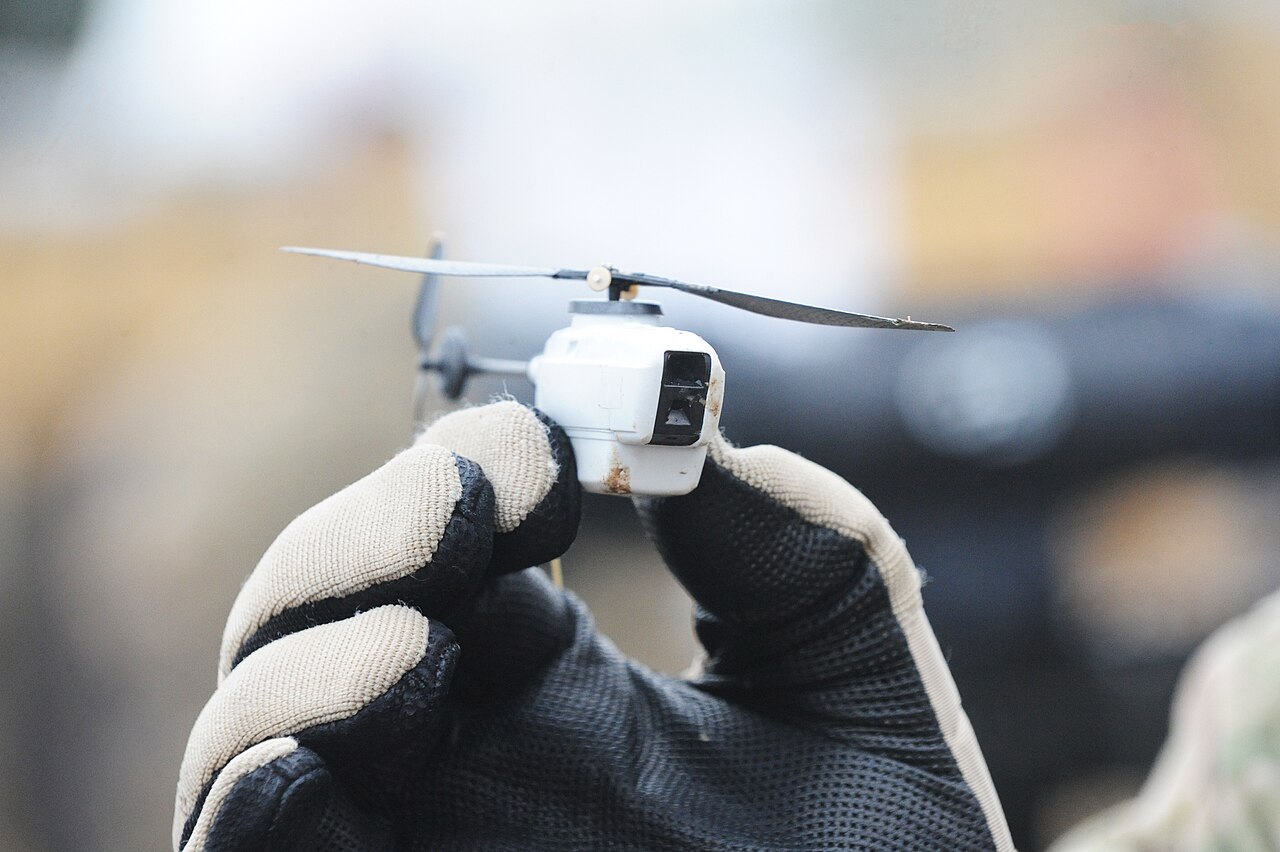
Black Hornet (PD-100 / Black Hornet 4)
Teledyne FLIR Defense · Norway
Nano-class reconnaissance UAV originally developed by Prox Dynamics of Norway (PD-100), now produced by Teledyne FLIR. The latest Black Hornet 4 weighs about 70 g with 30+ minutes endurance and 2+ km range.
| Country | Norway |
|---|---|
| Subcategory | Nano / Micro |
| Subtype | Nano UAV |
| Role | ISR |
| Class | Nano/Micro |
| Classification | Nano UAV (Personal Reconnaissance System) |
| Mission | Close-range ISR |
| Datalink | Encrypted digital data link |
| Variants | PD-100, Black Hornet 2, 3, 4 |
| Notable partners | US Army, British Army, German Army, Norwegian Army |
| MTOW (kg) | 0.07 |
| Operators | United States, United Kingdom, Germany, Norway |
| Frame type | Multirotor |
| Length (m) | 0.255 |
| Propulsion | Electric |
| Range (km) | 2 |
| Combat-proven | Yes |
| Export status | Exported to NATO and allied nations |
| Launch method | Hand launch |
| Autonomy level | Autonomous waypoint |
| Endurance (min) | 30 |
| Recovery method | Hand recovery / vertical landing |
| Year introduced | 2024 |
| Max speed (km/h) | 36 |
| Standard sensors | EO daylight cameras and thermal/LWIR imager |
| Production status | In production |
| Conflicts deployed in | Afghanistan; Ukraine (reported) |
| Airframe / lift type | Multirotor – quad |
| Control / autonomy level | Waypoint / GPS-guided |
| Domain | Aerial (UAV/UAS) |
| Mission / use case – military | ISR |
| Origin / supply chain | Military-grade |
| Propulsion | Electric (LiPo / Li-ion) |
| Range / endurance | Very close range (<5 km, <1 hr) |
| Signature / detectability | GNSS-dependent, RCS – nano/micro (<0.01 m²), RF-emitting |
| Speed regime | Low (<50 km/h) |
| Threat vector | Surveillance / reconnaissance |
| Weight / class | Class I – Micro (<2 kg), FAA <250 g |
Review-stage catalogue data — specs corroborated from manufacturer and secondary sources; not for procurement decisions. Source: defense.flir.com/defense-products/black-hornet-4-prs