UAV · Professional inspection octocopter
Falcon 8+ (AscTec / Intel Falcon 8+)
Germany
V-shaped octocopter for industrial inspection, surveying and mapping, originally built by Ascending Technologies (Germany) and later marketed by Intel, with triple-redundant autopilot.
| Country | Germany |
|---|---|
| Subcategory | Multirotor |
| Subtype | Professional inspection octocopter |
| Role | Civil/Commercial |
| Class | Small Tactical |
| Classification | Commercial / industrial UAV |
| Mission | Industrial inspection, surveying, mapping |
| Variants | AscTec Falcon 8, Intel Falcon 8+ |
| Notable partners | Intel, Topcon |
| MTOW (kg) | 2.8 |
| Operators | Commercial / civil users |
| Frame type | Multirotor |
| Propulsion | Electric |
| Combat-proven | No |
| Export status | Commercially available (discontinued) |
| Launch method | Vertical take-off |
| Autonomy level | Autonomous waypoint |
| Endurance (min) | 26 |
| Recovery method | Vertical landing |
| Year introduced | 2016 |
| Max payload (kg) | 0.8 |
| Max speed (km/h) | 57.6 |
| Standard sensors | Sony cameras / thermal payloads |
| Production status | Retired |
| Service ceiling (m) | 4000 |
| Airframe / lift type | Multirotor – octo |
| Control / autonomy level | Waypoint / GPS-guided |
| Domain | Aerial (UAV/UAS) |
| Mission / use case – civil | Inspection, Survey / mapping |
| Origin / supply chain | Military-grade |
| Propulsion | Electric (LiPo / Li-ion) |
| Range / endurance | Very close range (<5 km, <1 hr) |
| Signature / detectability | GNSS-dependent, RCS – small |
| Speed regime | Medium (50–150 km/h) |
| Weight / class | Class I – Mini (2–20 kg), FAA <25 kg (Part 107) |
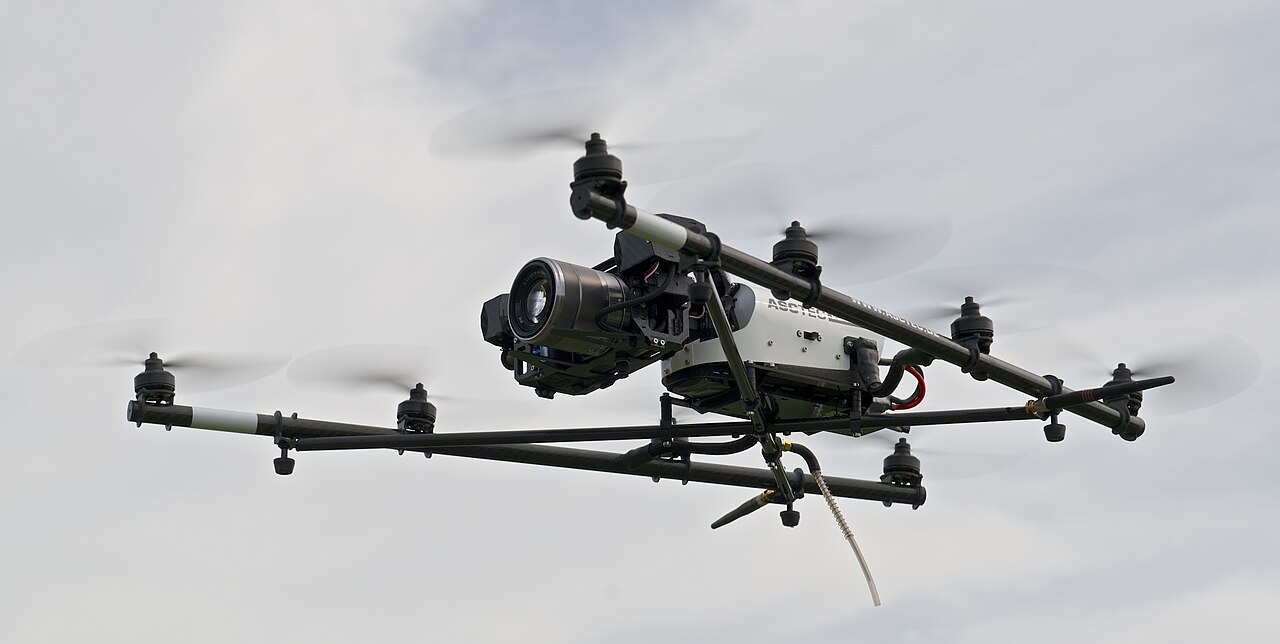
Review-stage catalogue data — specs corroborated from manufacturer and secondary sources; not for procurement decisions. Source: www.intel.com/content/www/us/en/products/sku/98476/intel-falcon-8/specifications.html