UAV · Air-launched micro-UAV swarm
Perdix
MIT Lincoln Laboratory / U.S. DoD Strategic Capabilities Office · USA
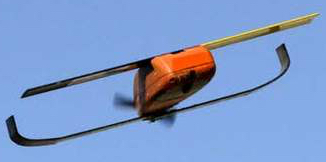
An air-droppable micro-drone (~290g, ~165mm) launched in swarms from fighter flare dispensers to perform collective, self-organizing low-altitude ISR. Originated from MIT student designs (2011), militarized 2013; famous 103-drone swarm demonstration from F/A-18s in 2016.
| Country | USA |
|---|---|
| Subcategory | Fixed-wing |
| Subtype | Air-launched micro-UAV swarm |
| Role | Swarm ISR demonstrator |
| Class | Micro |
| Classification | Military experimental micro-UAV (swarm) |
| Mission | ISR, swarm experimentation, collective decision-making |
| Datalink | Inter-drone mesh / distributed swarm comms |
| Variants | Perdix (multiple generations; gen 6 in 2016 demo) |
| MTOW (kg) | 0.29 |
| Operators | U.S. DoD (experimental) |
| Frame type | Fixed-wing |
| Length (m) | 0.165 |
| Propulsion | Electric, rear pusher propeller, LiPo battery |
| Wingspan (m) | 0.3 |
| Combat-proven | No |
| Export status | Not exported |
| Launch method | air-drop from fighter flare dispenser |
| Autonomy level | Autonomous swarm (collective/self-healing) |
| Endurance (min) | 20 |
| Recovery method | expendable/recovery |
| Year introduced | 2016 |
| Max speed (km/h) | 111 |
| Standard sensors | ISR sensors (smartphone-derived components) |
| Production status | Experimental/demonstration |
| Notable engagements | 103-drone swarm released from three F/A-18 Super Hornets, China Lake, Oct 2016 |
| Airframe / lift type | Fixed-wing |
| Control / autonomy level | Fully autonomous (human-off-the-loop, AI-navigated), Swarm / cooperative |
| Domain | Aerial (UAV/UAS) |
| Mission / use case – civil | Research |
| Mission / use case – military | ISR |
| Origin / supply chain | Military-grade |
| Propulsion | Electric (LiPo / Li-ion) |
| Range / endurance | Very close range (<5 km, <1 hr) |
| Signature / detectability | RCS – nano/micro (<0.01 m²) |
| Speed regime | Medium (50–150 km/h) |
| Threat vector | Surveillance / reconnaissance, Swarm / saturation |
| Weight / class | Class I – Micro (<2 kg), FAA <25 kg (Part 107) |
In the news 1
From uav360.xyz, the xSonomy news feed. Headlines link to the original publisher.
Review-stage catalogue data — specs corroborated from manufacturer and secondary sources; not for procurement decisions.